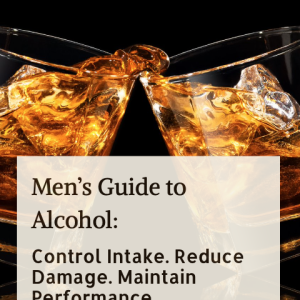
MEN’S GUIDE TO ALCOHOL
Control Intake. Reduce Damage. Maintain Performance.
WHAT THIS EBOOK IS FOR
This system is designed for men who:
- Drink alcohol regularly or socially
- Want to improve health, performance, and body composition
- Do not want to eliminate alcohol completely
- Need a structured way to manage intake without losing control
This is not a restriction plan.
This is a control system.
WHAT THIS EBOOK CHANGES
Before:
- Reactive drinking habits
- Poor food decisions around alcohol
- Uncontrolled calorie intake
- Reduced recovery and performance
After:
- Structured alcohol intake
- Controlled calorie impact
- Maintained training and recovery
- Reduced physiological disruption
WHAT THIS EBOOK IS
A practical, evidence-based framework for:
- Understanding alcohol’s impact on the body
- Managing intake without extreme restriction
- Maintaining performance while drinking
Alcohol is not the problem.
Uncontrolled use is.
WHAT YOU’LL LEARN
- What alcohol does physiologically
- How it affects fat loss, muscle, and hormones
- How to structure drinking without derailing progress
- How to reduce damage before, during, and after drinking
- How to stay in control in social environments
WHAT ALCOHOL ACTUALLY DOES
Alcohol is prioritised by the body.
When consumed:
- The liver shifts focus to metabolising alcohol
- Fat oxidation is reduced
- Nutrient processing is delayed
Outcome:
- Increased fat storage likelihood
- Reduced recovery
- Impaired sleep quality
Alcohol also affects:
- Testosterone (reduction with excessive intake)
- Hydration levels
- Cognitive control (leading to poor food choices)
THE REAL PROBLEM
Alcohol is rarely the issue on its own.
The problem is:
- Excess intake
- Poor food decisions while drinking
- Lack of structure
- No recovery protocol
CORE SYSTEM: CONTROL FRAMEWORK
Alcohol management is driven by:
- Quantity
- Frequency
- Context
When these are controlled, alcohol becomes manageable.
TYPES OF ALCOHOL (PRACTICAL HIERARCHY)
Lower impact options:
- Spirits with zero-calorie mixers (vodka, gin, whisky + soda)
Moderate impact:
- Wine (controlled portions)
Higher impact:
- Beer (higher carbohydrate load)
- Sugary cocktails (high calorie + high sugar)
Principle:
The more sugar and volume, the higher the impact.
DAILY STRUCTURE (WHEN DRINKING)
Before drinking:
- Eat a protein-based meal
- Hydrate (500–750ml water)
During drinking:
- 1 drink → 1 water
- Maintain slow pace
- Avoid stacking drinks quickly
After drinking:
- Hydrate again
- Return to normal structure next day
WEEKLY STRUCTURE
Recommended frequency:
- 1–2 sessions per week
Avoid:
- Consecutive heavy drinking days
Set limits:
- Pre-defined number of drinks before the event
TRAINING CONSIDERATIONS
Do not train intensely immediately after heavy drinking.
Adjust:
- Lower intensity sessions
- Focus on movement and recovery
Alcohol impacts:
- Strength output
- Coordination
- Recovery capacity
NUTRITION CONTROL
On drinking days:
- Reduce unnecessary fats earlier in the day
- Maintain protein intake
- Keep meals simple and structured
Avoid:
- Late-night high-calorie food stacking
Principle:
Alcohol + uncontrolled food = fat gain
REAL-LIFE RULES
- Never drink without eating first
- Never drink without hydration
- Do not combine alcohol with high-sugar mixers
- Do not “reward” drinking with excessive food
- Return to structure immediately the next day
COMMON MISTAKES
- Drinking on an empty stomach
- Binge drinking after restriction
- Ignoring liquid calories
- Skipping meals → overeating later
- Letting one event turn into multiple days
FAILURE PROTOCOL
If you overdrink:
- Do not restrict the next day
- Do not skip meals
- Return to structured eating immediately
- Hydrate and move
The mistake is not the problem.
The response is.
ENVIRONMENT CONTROL
- Choose venues where you can control intake
- Avoid environments that push excess drinking
- Set boundaries before entering social settings
IDENTITY FRAME
You are not “someone who drinks too much.”
You are:
- A structured individual
- In control of your inputs
- Able to participate socially without losing discipline
AI INTEGRATION
Use AI tools to:
- Track alcohol intake
- Estimate calorie impact
- Adjust nutrition accordingly
- Maintain awareness of patterns
BOTTOM LINE
Alcohol does not destroy progress.
Lack of control does.
Structure your intake.
Control your environment.
Maintain your standards.
DISCLAIMER
This ebook is for educational purposes only and does not replace medical advice. Consult a qualified healthcare professional if you have underlying health conditions or concerns related to alcohol consumption.
COPYRIGHT
© ROSI3R Coaching Techniques. All rights reserved.
No part of this publication may be reproduced or distributed without written permission.